Why I love Singapore Maths and Why It Makes Primary Maths Feel Easy
(And what parents need to know about the CPA method)
A decade ago, Singapore maths was all the rage in our UK schools and with good reason. When global maths rankings are released, the same regions appear at the top:
Singapore, Shanghai, Hong Kong, Japan, South Korea all following the CPA method.
Children are not doing more maths or learning faster, they are learning maths differently, which is in alignment with their natural development.
As a teacher who visits different schools, sadly I don’t see this methods used as much these days in schools.
What makes Singapore Maths so powerful is not worksheets or pressure. It’s the way concepts are built so that understanding comes before memorisation.
What is Singapore Maths?
Singapore Maths is a mastery-based approach that focuses on:
Fewer topics taught each year
Concepts being explored more deeply
Progression happening only after understanding is secure
In contrast, Western systems in my professional opinion:
Cover too many topics too quickly
Move on regardless of mastery
Prioritise curriculum coverage over conceptual security
The result?
In the East instead of rushing through content, children stay with a concept until it makes sense. In the West, children, move on whether it makes sense or not. Eastern students therefore build strong foundations that support later complexity. Western students often develop gaps that compound over time.
Naturally, children in the East love maths and are renowned for being very good at it.
Their approach reduces:
Cognitive overload
Maths anxiety
Guessing and rote learning
It increases:
Confidence
Flexibility
Long-term retention
So how does Singapore Maths work and How can parents support their children’s learning at home using this method instead? The CPA approach
CPA stands for:
Concrete → Pictorial → Abstract
This sequence mirrors how the brain actually learns.
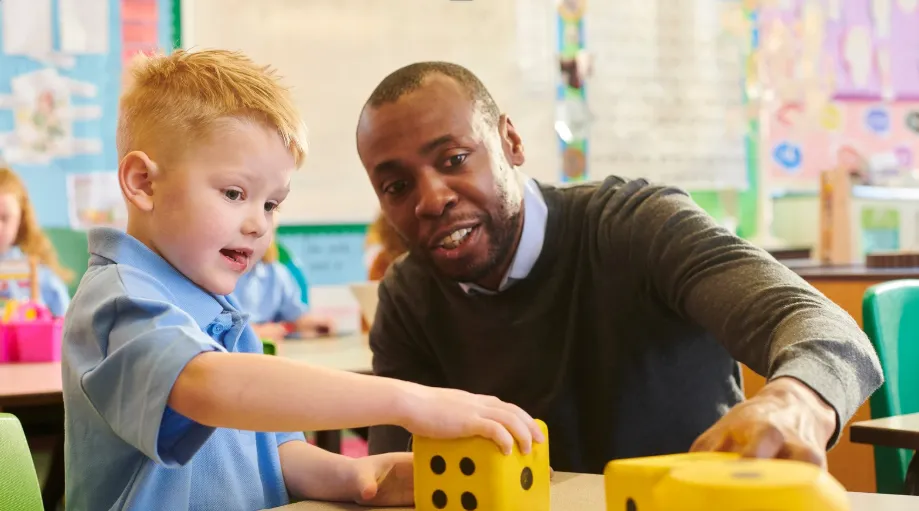
1. Concrete means hands-on understanding
Children begin by physically manipulating objects:
Counters
Cubes
Beads
Numicon-style resources
At this stage, maths is not symbolic. It’s experienced. It’s practical. Young children literally feel the maths.
But what does that mean?
It means they don’t learn numbers 1-10. They feel the numbers.
1 is one jump
2 is 2 claps
3 is collecting 3 toys
It’s about associating the numbers to themselves. How many hands do they have? How may fingers do they have etc. They become the numbers.
Why this matters:
It reduces fear
Anchors meaning
Builds real number sense
Children don’t just hear that 7 + 5 = 12.
They see and feel why.
Concrete learning means they are physically immersed in the learning.
Once they understand what numbers are physically, they move to the next phase.
2. Pictorial – Now this is where most western schools start
This is the visual representations:
Seeing the patterns
Reading the text
Using pictures
Using paper
Bar models
Number bonds
Part–whole diagrams
This is where Singapore Maths is especially distinctive.
The pictorial stage is about problem solving:
Seeing relationships visible
Drawing the answer
This helps children organise thinking
This is why Singapore-trained children are so strong at word problems—because they can see the structure, not just the numbers.
3. Abstract (Symbols make sense)
Only once the physical and visual understanding is secure do children move onto:
Numbers
Symbols
Algorithms
At this point children are able to work things out in their heads – what we refer to as mental maths:
Symbols like + = x now simplify their knowledge and make things easier to write down.
Procedures are logical, not random
Children know why methods work
This is where many systems begin. Whereas this is where Singapore Maths ends.
Why this makes maths feel “easy”
When children:
Understand how numbers work they can manipulate them memorising concepts more easily
When concepts are built step by step, there is a natural flow
Children don’t feel rushed and confused
Maths stops feeling like a test of intelligence and starts feeling like a solvable puzzle.
What parents need to know (and unlearn)
1. Confusion is not failure
If your child is drawing, using cubes, or talking through a problem, they are learning—even if it looks slower.
Once they understand the pictorial stage, ask them is there a way we can do the maths quicker? That’s when abstract representations make more sense.
For example: I want to solve the following problem: I have 20 seeds and need to plant them in my garden. If I plant them in rows, how many seeds will I plant in each row?
Concrete: put the seeds physically in different arrays.
Pictorial: draw the seeds in arrays
Abstract: 1x20, 20x1, 2x10, 10x2, 5x4, 5x4

2. Don’t rush to “the shortcut method”
Don’t jump to the abstract if they can’t see the concrete
Ask instead:
“Can you show me how you see it?”
“What does this part represent?”
3. The pictures matter
Bar models and diagrams are not a crutch. They are a bridge.
Strong visual thinkers become strong abstract thinkers.
4. Mastery means depth, not speed
Revisiting the same concept is a feature—not a flaw.
Why this matters beyond primary school
Children taught through CPA:
Are more resilient problem-solvers
Transfer skills across topics
Are less likely to develop maths anxiety
Perform better on unfamiliar problems
They don’t just learn maths.
They learn how to think mathematically.
Singapore Maths works because it respects how children learn.
When we slow down, make learning visible, and build understanding from the ground up, maths becomes something children can trust themselves with.
And that changes everything.


