What should a child know by the end of year 2
WHAT SHOULD A CHILD KNOW BY THE END
OF YEAR 2
Year 2 Primary School Infants
By the end of Year 2, children should know how to read fluently and be able to extract the meaning from what they read, ready for KS2.
This will include non-fiction as well as fiction text.
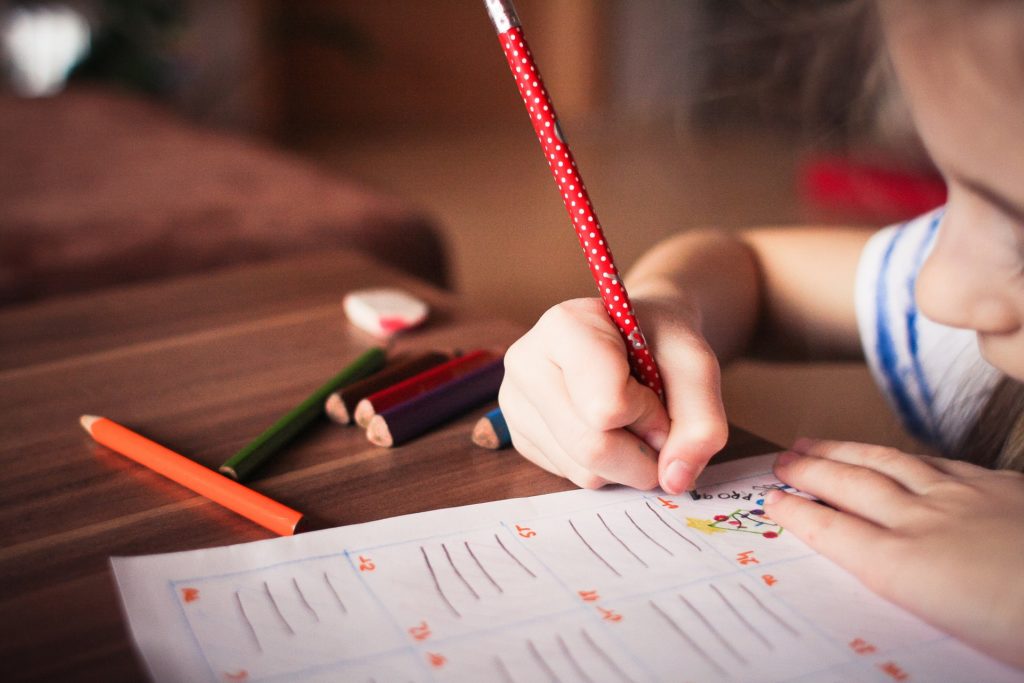
They should also be able to write well including, neatly on the line with correctly formed letters.
In terms of spelling and phonics, they should have learnt all the phonic sounds from Reception and Year 1, and be able to spell them, including the exception or tricky words. They should also be able to able to decode unknown words easily.
Most children by the end of Year 2 are free readers, meaning they have completed the banded books reading programme. They will then be free to read books from the library of their own choice. Rather than books from a particular selection of books directed by their teacher.
All children will be tested at the end of the year to assess their ability levels, before moving onto the next year.
Assessments take place in May, so holidays should be avoided around this period.
These assessments are very anxious times for the schools, as the results reflect on their teaching standards.
What a child should know by the end of year 2 in Literacy:
In Literacy, the children will continue to work on the phonics they have learned from Year 1 and start to read these words as sight words. Meaning, they will read them as soon as they see them, without the need to sound out each letter individually. They will learn other spelling rules and start to use them in their writing. They will also look at more complex spellings in the form of words containing apostrophes for belonging, homophones, near homophones and suffixes.
In writing, they will need to add more detail, creating longer sentences by using conjunctions, and creating expanded noun phrases. There will be a bigger focus on handwriting, with children not only being encouraged to form their letters correctly, but for the more able ones to write in cursive handwriting.
Children will also learn to write a range of texts including stories, poems and about real events in their lives.
Grammar
Grammar will be a big focus and will filter into their reading and writing:
They will need to become familiar with the terms:
Noun phrases
Expanded noun phrases
Subordinating conjunctions
Co-ordinating conjunctions
Statements
Questions
Exclamations
Commands
Compound sentences
Past tense
Present tense
Suffixes
During Year 2, children will use these in the following topics:
Turn ideas into sentences
Answer questions in sentences
Read with expression
Understand prefixes
Write with adjectives, connectives
Produce character profiles
Understand the use of paragraphs
Use commas as well as full stops and capital letters
Work with dictionaries
Write letters, understand the layout
Write invitations, poems, stories, reports, e-mail
Carry out simple comprehension independently in full sentences
Use verbs, adjectives, nouns, connectives
Identify speech marks in reading
Understand how past tense is used when retelling a story to someone
Understand captions, headings, sub-headings be able to use them to break up non-fiction writing
Learn that synonyms are words with similar meanings
Understand the use of instructions
What a child should know by the end of year 2 in Numeracy:
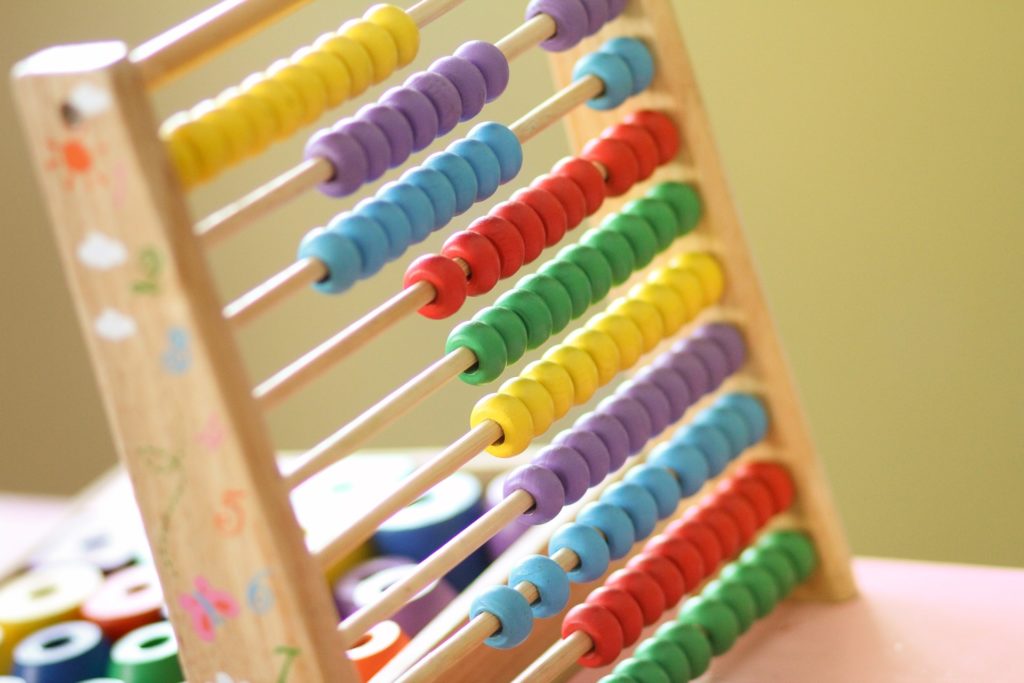
Numeracy in Year 2 focuses more on the 2, 5 and 10 times-tables, but children are also expected to learn their 3,4, and 11 times tables too if possible. Children will also:
Learn to count, read, write and order numbers from 0 to 100 backwards and forwards
Sequence numbers according to odd/even numbers, counting backwards or forwards by 1 or 10 places starting from double-digit numbers
Add and subtract with two-digit and one-digit numbers.
Understand place value
Know that addition is the opposite of subtraction, and answers can be checked by doing the opposite
Understand that multiplication is repeated addition
Learn different ways of doing addition to solve simple problems
Add using number bonds for 10, so that addition and subtracting can be done easily
Know that halving is opposite of doubling
Use fractions, where they will find 1/2 ,1/4, 3/4 and 1/3, of a shape or a quantity.
Know by heart the 2, 5 and 10 times tables, including their multiples and division facts for the 2, 5 and 10 times-tables.
Tell the time in five-minute intervals, using both analogue and digital time
Draw measured lines to the nearest cm and read common measurements, for lengths, masses, capacities and temperature
Suggest suitable equipment to measure masses, lengths and capacities
Use mathematical names for 2-D and 3-D shapes, and describe properties
Left, right, upwards, downwards, backwards, forwards etc. to describe direction, movement and position
Understand movement using the compass directions and in quarter turns, clockwise or anti-clockwise
Use mathematical vocabulary to describe position, direction and movement
Solve problems, explaining reasoning and showing simple understanding of how to work them out
Use data-handling incl. bar charts and pictograms.
The new ‘mastery’ curriculum means children now also need to apply their knowledge to solve problems and challenges, as well as do calculations.
What a child should know by the end of year 2 in Science:
In Science, Year 2 are expected to learn about living things, their habitats, plants, animals (including humans) and uses of everyday materials..
During Year 2, children will study the following topics:
Life Processes and Living Things, such as animals, plants and humans
What the similarities and differences are between them
Their habitats
What living and non-living means
What materials and their properties are, such as metals, wood, plastics, how they are different, what they are used for
Learn how to draw diagrams, charts, and graphs and these are different from a picture
Carry out investigations and learn new scientific language
Learn about everyday things and personal health, such as nutrition, meals
Learn about model life cycles of plants and animals, such as frogspawn, caterpillars and seeds
Investigatethe basic plant structure
Group animals and plants together according to their similarities and differences
Learn how materials change when they are heated, such as plastics
Learn about forces and movement. Push and pull forces for example, and how these occur when cars roll down a hill
Experiments to do with speed and distance and toy cars
Learn about things that use electricity and things that don’t
Construct circuits that light up bulbs
They will also learn how to observe closely,
and how to record their observations
How to help my child in year 2
The biggest challenge year 2 children face is being able to read at a good enough level to take the end of Year 2 SATs papers.
With poor reading skills this test is very hard to do.
To support your child in Year 2 focus on reading comprehension and check their understanding by asking them questions about what they have read.
Also ask questions about what could have happened if the situation changed or even to suggest an alternative ending.
This will develop their thinking skills too.
Ask things like, “Why was he so angry? How do we know he was sad?” This will develop a greater depth of understanding.
Also talk about how the punctuation is used, such as exclamation marks and why they have been used.
Change your voice to express the differences created by the punctuation. Give the characters different voices ask them to imitate.