Earn while empowering children, teens, parents & educators.
Share Resources. Empower Families. Promote mental health, creativity and learning resources — and earn generous commissions for every referral.

Why Partner with Us?
Our affiliate courses are designed by experts who have years of experience
❤️
Promote high-quality resources
Every product you promote is designed to uplift, educate and empower — so you can feel proud of every referral.
💸
Earn 15–30% commissions per sale
Earn generous commissions by sharing high-impact tools designed for real emotional growth.
📈
Unlimited earning potential
Unlimited earning potential with every product you promote — all while helping children, teens and families thrive.
👩🏫
Perfect for educators, content creators and parents
Ideal for educators, creators and mums & dads — turn your passion for helping kids into passive income.
🎁
Exclusive bonuses + early product access
Join today to access new launches before the public — plus earn extra rewards along the way.
💬
Supportive team & easy-to-use dashboard
You're never alone — our friendly team and intuitive dashboard make promoting simple and stress-free.

5+Courses

5k+Happy Clients

10+Programs

About us
About Parent Teacher Affiliate
Parent Teacher is a heart-centered platform dedicated to supporting the education, mental health, creativity and resilience of children, teens and their families.
Created by educators and mental wellness advocates, our tools are designed to bridge the communication gap between parents and their children and to help young people feel seen, supported and inspired.
Our offerings include:
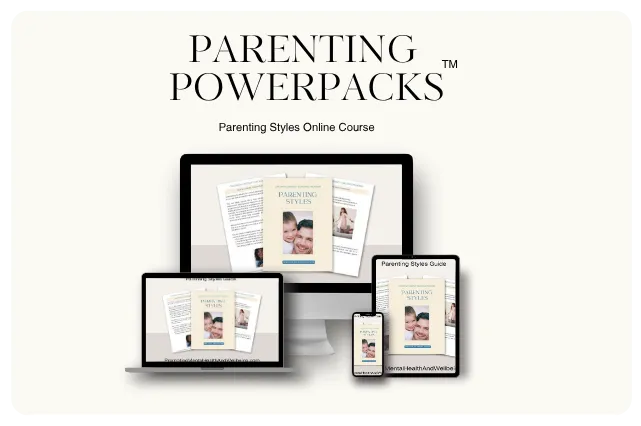
📘 Guided mindset programs
🎨 Creative writing & art competitions
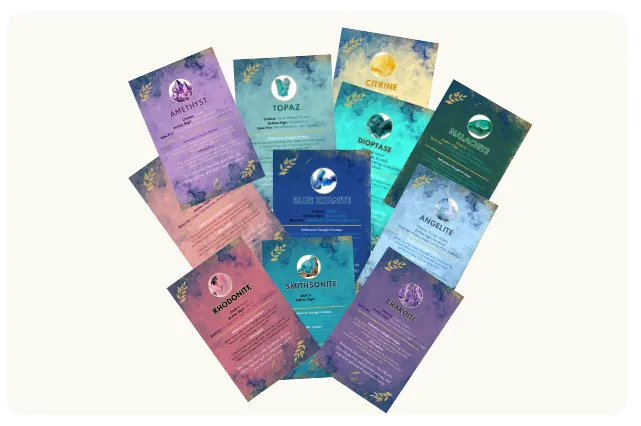
🃏 Crystal-themed cards for emotional support
🧠 Free printable tools & resources
Whether you're a parent, teacher, coach or creative — we invite you to join our mission and grow with us.
What You’ll Be Promoting
What Can You Share & Earn From?
Crystal Card Packs
Mental health tools for teens

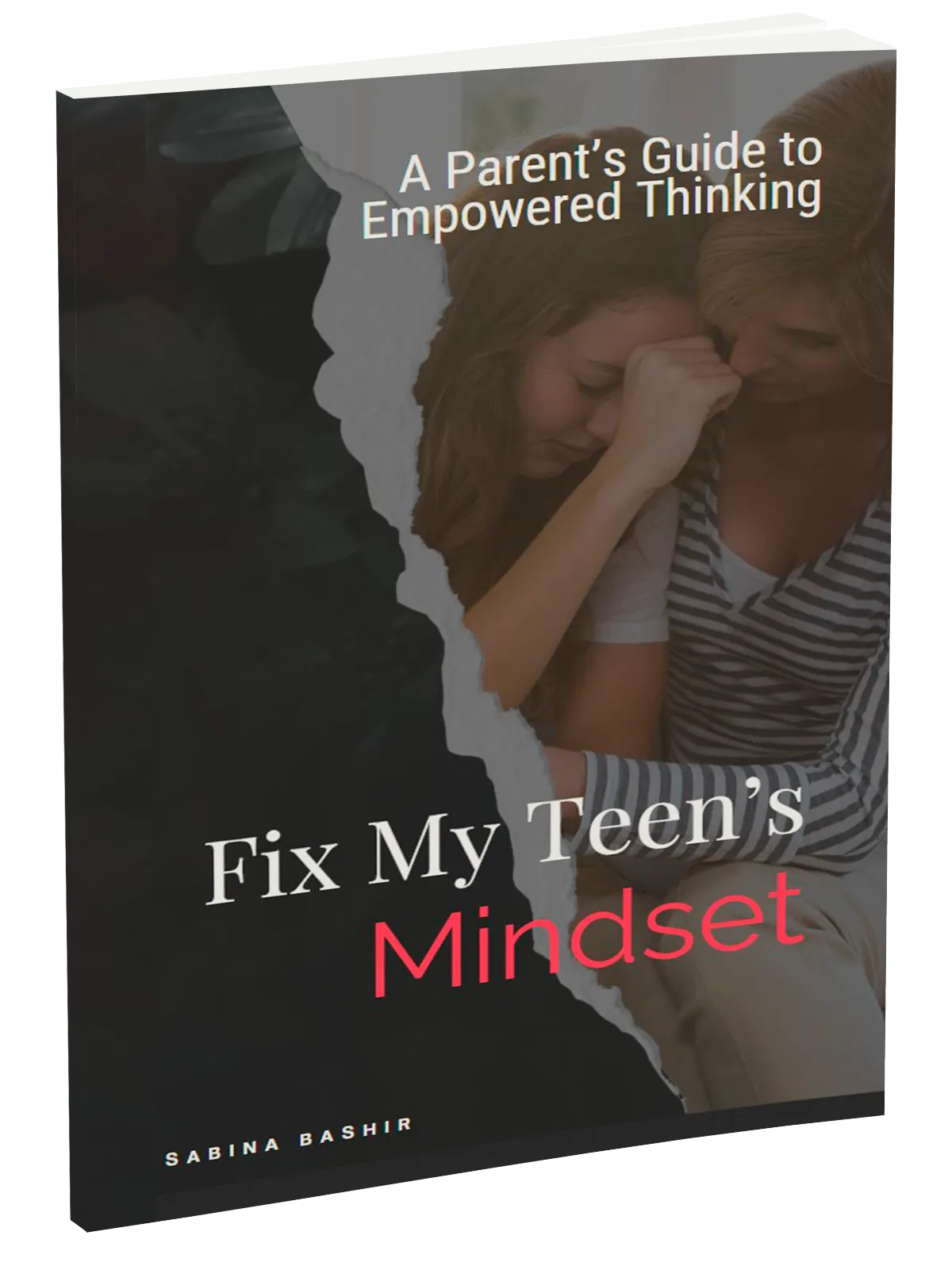
Teen Mindset Program
6-week emotional growth course
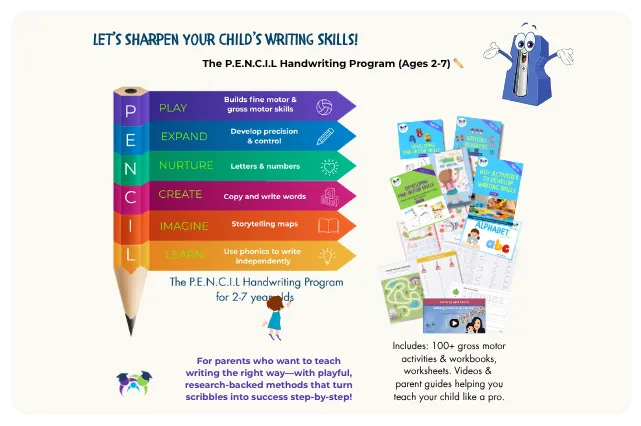
P.E.N.C.I.L Program
Educational and Wellbeing Products - More courses available soon
Your Path to Passive Income
Turn your passion for helping families and teens into a steady income — without stocking products, dealing with customer service, or investing in ads.
How It Works
It’s Simple and Rewarding
1️⃣ Sign Up
It’s fast and free
2️⃣ Get Your Unique Link
Share it anywhere
3️⃣ Earn Commission
Get paid monthly for every sale
Loved by Affiliates & Families Alike
Our courses are designed by experts who have years of experience and proven results in the education space.

"As a teacher with over 15 years of experience, I’m very selective about the programs I recommend to my network. These courses are not just theory—they’re practical, engaging, and grounded in solid educational research. My referrals consistently report remarkable improvements in their children’s confidence, communication, and learning mindset. Partnering with this team has been one of the easiest and most rewarding decisions I’ve made."

James L., Teacher & Education Affiliate
"As a parenting blogger, I’m constantly reviewing products and courses aimed at supporting families. What sets these programs apart is the heart and expertise behind them. Every lesson is crafted with both children and parents in mind, making it easy to build stronger connections while boosting learning outcomes. My readers love them, and I’ve seen first-hand how they transform everyday family life."

Emma R., Parenting Blogger
"I originally joined as a parent wanting to help my own children, but I was so impressed with the results that I became an affiliate. I set up my affiliate link once and shared it with my Facebook group. Now, I receive monthly commissions just from one post!”

Sarah P., Parent & Affiliate Partner
Ready to Join Our Affiliate Family?
Let’s grow together. Empower families and earn along the way.
Our Latest Articles

What should a child know by the end of year 6
WHAT SHOULD A CHILD KNOW
BY THE END OF YEAR 6
Year 6 Junior School – Juniors
Preparation for SATs
Year 6 is finally here. Emotions run high as your child makes it to the top of the school. This is a year of mixed feelings and by the end of year 6, your young learner will be more confident, independent and resilient.
As they watch the children in Nursery and Reception, they’ll look back and realise how much they’ve grown and how far they’ve come. They are now the oldest in the school – the role models.
Most will try to fulfil this role, making this year the most memorable.
Some will be very grown up and sensible during this year; behaving more confidently, while others regress; wanting to wind the clock back. They’ll worry about entering secondary school and leaving their past life behind.
SATs, SATs and more SATs
Everything is centred around the end of Year SATs, which take place in May. These will highlight the children who have reached the expected levels required for secondary school – as specified by the government. These in turn will also predict, who are likely to get good GCSE grades at the end of secondary school and who will not. Those who do not reach the expected levels, will be highlighted for intervention for when they enter secondary school.
This is a nerve-racking time for both parents and teachers alike too.
Stress from parents and schools
The grades the children achieve this year will be published as a percentage for the whole school; giving an indication of how good the school is. For this reason, it will be very important for Year 6 teachers to ensure that children achieve the best grades possible by the end of Year 6. As the grades reflect teaching standards, children tend to feel the pressure of having to meet expectations.
Even though this is an assessment like every previous year, because of parental nervousness and school pressure, the stress will be felt more acutely.
Even if they didn’t before, this year most Year 6 children will understand the importance of getting good grades.
It must be stressed, that the SATs do not have a pass or fail element, so while it is important to get the best grades possible, your child cannot actually fail these tests.
The majority of children will reach the expected levels for their age, if they’ve been taught well, and the school did not have a high quota of SEND children with learning difficulties.

The stress of moving on
Parents will also be nervous this year too, feeling the anxiety of choosing new schools and having to adjust to the many changes ahead.
In this year, like when children first started nursery ,will see many Year 6 children looking to gain assurance and support that all will be well.
On a final note, it is very important to remember, that while there is a huge emphasis on the SATs this year, this is not the end of school. This year is the transition to secondary school, which means children will need to be prepared for the work they will be doing when they move on. Therefore, this year is as much about preparing children for the work in secondary school, as it is the SATs.
What a child should know by the end of year 6 in Literacy:
In preparation for secondary school, children need to understand how to use a variety of punctuation; write using a wide range of sentence structures and also use descriptive vocabulary. For this reason, many of the things taught in secondary school, have been brought down into the year 6 curriculum to bridge the gap between the two schools.
During Year 6, children will use these in the following areas:
Plan quickly the presentation of work and write stories and other text using accurate punctuation and layout
Read dramas and Shakespearian text; understand how plays are adapted for modern day
Explain how words are used to emphasis viewpoints, and show how arguments are presented
Show how characters are influenced by events in written text
Explain other people’s perspectives in written text
Improve presentation of work
Expand vocabulary
Improve spelling
Be able to explain the meaning of words in various types of literature and attempt to explain what is trying to be portrayed
Distinguish between biographies and autobiographies
Be able to write in first person and third person
Prepare a CV
Be able to write own poems
Revise work from previous year
What a child should know by the end of year 6 in Numeracy:
As in literacy, many topics from the secondary curriculum has been brought down into the primary curriculum and children will be expected to do things like algebra, pie charts using percentages, and finding angles in shapes etc.
During Year 6, children will use these in the following areas:
Understand how to mentally multiply and divide decimals by 10 or 100, and divide numbers by 1000
Order numbers with three decimal places with whole numbers
Perform addition and subtraction of numbers using decimals
Perform multiplication and division of numbers using decimals
Know how to carry out division using all the timetables
Be able to reduce fractions to their simplest form by cancelling common factors
Use fractions to find fractions of numbers (e.g. 3/5 of 60, 2/10 of 80, 2/100 of 500 metres)
Understand percentage as parts of 100 and find simple percentages of small numbers
Perform simple problems using ratio and proportion
Perform long multiplication of three-digit numbers by a two-digit numbers
Measure acute and obtuse angles with a protractor to the nearest degree
Calculate perimeters and areas of simple shapes that can be split into rectangles
Angles in shapes
Read and plot co-ordinates in all four quadrants
Use appropriate operations such as addition multiplication, subtraction and division or combinations of these operations to solve word problems involving quantities, and explain methods and reasoning
Simple algebra
Solve a problem using information from tables, graphs and charts
What a child should know by the end of year 6 in Science:
The science topics are broken into the following topics, which will
Animals including humans
To look at and identify the main parts of the human circulatory system, and describe the functions of the heart, blood vessels and blood
Understand the importance of diet, exercise, drugs and lifestyle on the way their bodies function
Describe how nutrients and water are carried in animals, including humans
Living Things and Habitats
Classify living things into groups based on similarities and differences, including micro-organisms, plants and animals
Give reasons for classifying plants and animals based on characteristics.
Evolution and inheritance
Understand that living things have changed over time and that fossils provide information about living things that inhabited the Earth millions of years ago
Recognise that living things produce offspring of the same kind, but normally offspring vary and are not identical to their parents
Understand that animals and plants have adapted to fit into their environment and that adaptation may lead to evolution
Light
Understand that light appears to travel in straight lines
Understand how objects are seen because they give out or reflect light into the eye
Explain how shadows are formed
Electricity
Brightness of a lamp or the volume of a buzzer linked to voltage of cells used in the circuit
Understand how different components in a circuit function, including the brightness of bulbs, the loudness of buzzers and the on/off position of switches
How to use recognised symbols in a simple circuit diagram.
Other subjects
The other subjects children take part in will vary considerably from school to school.
But they will include history topics, art, drama, DT, music, geography, RE, PE, IT and so on.
School visits
Towards the end of the year they will also visit their new secondary school and spend the day or two there. They will get a taste of new school life, meet their new teachers, make new friends and take part in classroom activities. Any questions they have will also be answered during these visits.
Trips away
After the SATs – or sometimes before the SATs, children get the opportunity to attend a residential trip. Here they are able to get away for a few days and take part in an outward bounds trip. Here children take part in outdoor activities such as abseiling kayaking, archery, country walks, orienteering, team building, camping and so on.
End of Year Play
The end of year play, is the opportunity for all year 6 children to be involved in a production. This is usually led by their teacher or external professionals. The children either act out a playscript or share experiences from their time in school. This is also an opportunity for parents to get involved with making costumes and thanking teachers who have taught the children over the years.
How can I help my child in Year 6?
Children should be more independent when it comes to needing help now, but they will still need support and encouragement to keep going when they feel overwhelmed.
As the text they read will be harder, they will still need you to read to them every now and then and to also listen to them read, for better comprehension.
The topics they learn, will now surprise many parents as children start to learn topics which have been brought down from the secondary curriculum. Don’t be surprised if you learn something new yourself.
If you struggle to help them because you do not know the answers yourself, don’t worry, teach them research skills and work with them to find the information they need from the internet or library.
Nobody knows everything – so it is important to be able to find the information you need when you get stuck too. This is a skill in itself and one you can help them with.

Frequently Asked Questions
You Might Be Wondering...
Is this free to join?
Yes — there’s no cost at all. In fact we provide our most successful affiliates their own webpage to sell from free of
charge.
How much can I earn?
You earn 30% commission on your first sale and then 15% on every sale your customer makes after that, for the
lifetime that your customer remains with us. This means you could be earning passive income from one customer for
years to come, as they buy new products. So there is capacity to earn passive income into the future, the more
customers you get.
In addition, if you introduce an affiliate to our program, you can earn a further 5% on all their customers' sales too.
Please be aware, we are very selective about our affiliates and they must meet our values and expectations. Otherwise their applications can be revoked according to our terms and conditions.
How do I promote?
We’ll send you images, captions and your unique link. We are also able to provide you a dedicated webpage with our
our products with your link on, that you can direct traffic to, this can generate you further income easily.
When do I get paid?
Payouts are processed 60 days and one week after a customer’s purchase, and are made via PayPal.
This time frame is necessary because of banking requirements, as we have to allow 2 months for any customer refunds.
You must also reach the £100 minimum payout threshold. Otherwise, frequent smaller payments would reduce your
commissions unnecessarily due to PayPal and banking fees, which are charged on every transaction.
By keeping payouts less frequent, we reduce charges—meaning you earn more.

Our affiliate courses are designed by experts who have years of experience and proven results in the affiliate marketing industry.
Explore Site
Newsletter
Subscribe To Our Newsletter
Copyright 2025. All Right are Reserved. The Parent Teacher