Earn while empowering children, teens, parents & educators.
Share Resources. Empower Families. Promote mental health, creativity and learning resources — and earn generous commissions for every referral.

Why Partner with Us?
Our affiliate courses are designed by experts who have years of experience
❤️
Promote high-quality resources
Every product you promote is designed to uplift, educate and empower — so you can feel proud of every referral.
💸
Earn 15–30% commissions per sale
Earn generous commissions by sharing high-impact tools designed for real emotional growth.
📈
Unlimited earning potential
Unlimited earning potential with every product you promote — all while helping children, teens and families thrive.
👩🏫
Perfect for educators, content creators and parents
Ideal for educators, creators and mums & dads — turn your passion for helping kids into passive income.
🎁
Exclusive bonuses + early product access
Join today to access new launches before the public — plus earn extra rewards along the way.
💬
Supportive team & easy-to-use dashboard
You're never alone — our friendly team and intuitive dashboard make promoting simple and stress-free.

5+Courses

5k+Happy Clients

10+Programs

About us
About Parent Teacher Affiliate
Parent Teacher is a heart-centered platform dedicated to supporting the education, mental health, creativity and resilience of children, teens and their families.
Created by educators and mental wellness advocates, our tools are designed to bridge the communication gap between parents and their children and to help young people feel seen, supported and inspired.
Our offerings include:
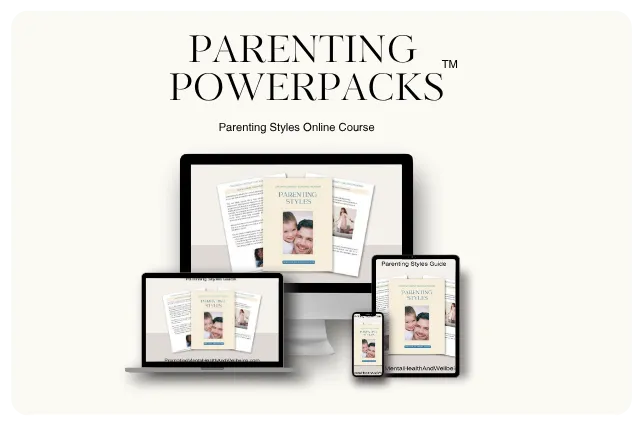
📘 Guided mindset programs
🎨 Creative writing & art competitions
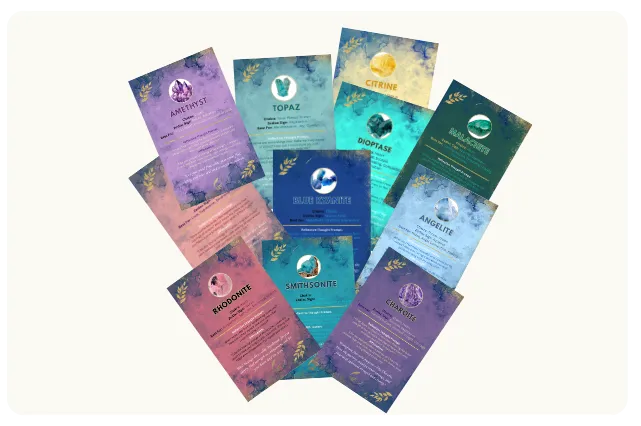
🃏 Crystal-themed cards for emotional support
🧠 Free printable tools & resources
Whether you're a parent, teacher, coach or creative — we invite you to join our mission and grow with us.
What You’ll Be Promoting
What Can You Share & Earn From?
Crystal Card Packs
Mental health tools for teens

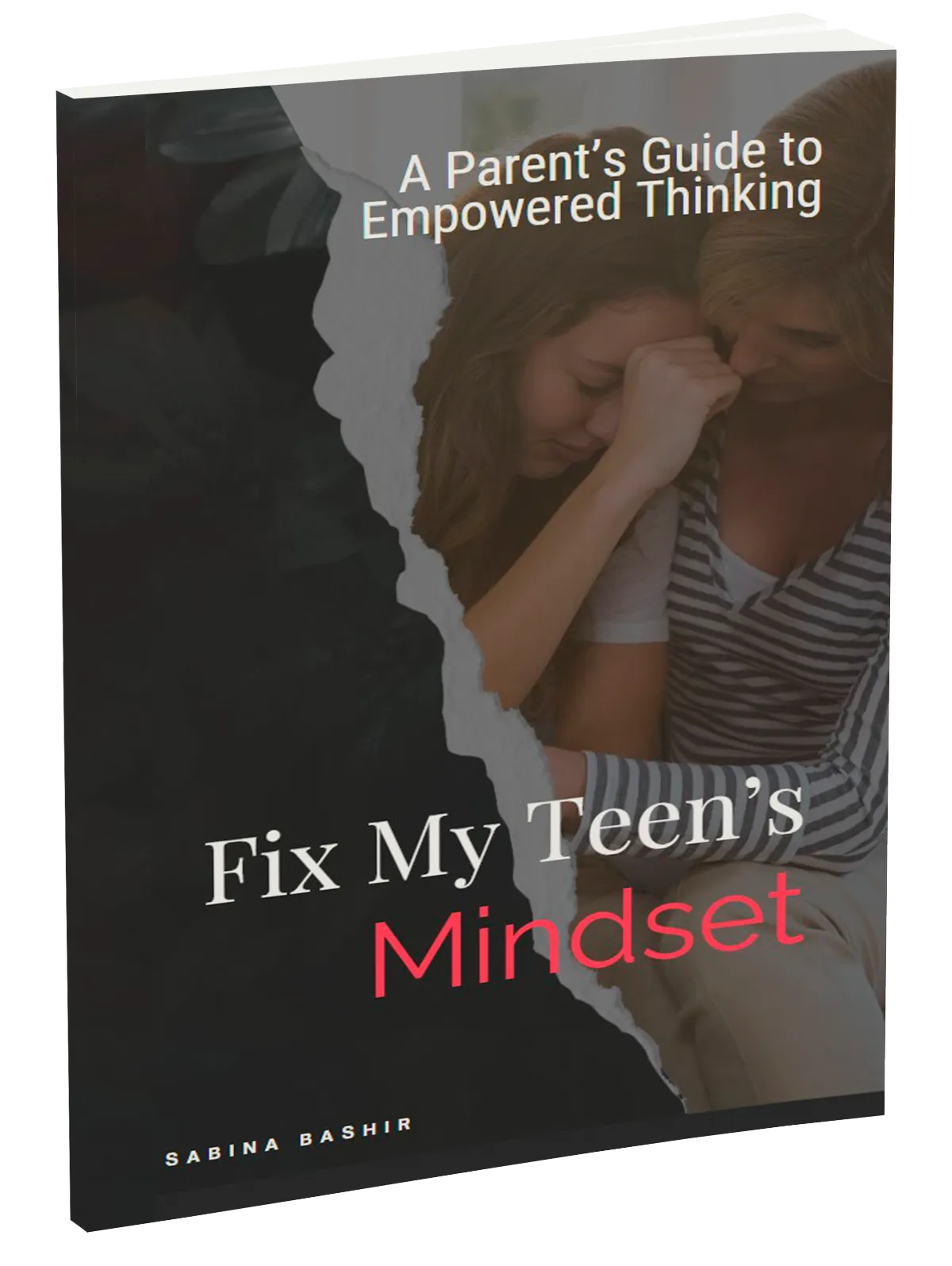
Teen Mindset Program
6-week emotional growth course
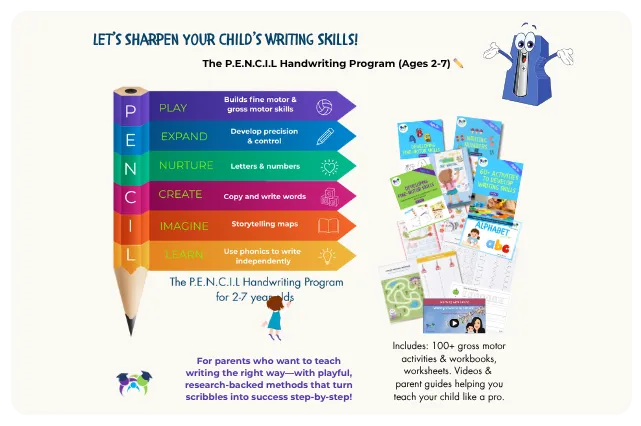
P.E.N.C.I.L Program
Educational and Wellbeing Products - More courses available soon
Your Path to Passive Income
Turn your passion for helping families and teens into a steady income — without stocking products, dealing with customer service, or investing in ads.
How It Works
It’s Simple and Rewarding
1️⃣ Sign Up
It’s fast and free
2️⃣ Get Your Unique Link
Share it anywhere
3️⃣ Earn Commission
Get paid monthly for every sale
Loved by Affiliates & Families Alike
Our courses are designed by experts who have years of experience and proven results in the education space.

"As a teacher with over 15 years of experience, I’m very selective about the programs I recommend to my network. These courses are not just theory—they’re practical, engaging, and grounded in solid educational research. My referrals consistently report remarkable improvements in their children’s confidence, communication, and learning mindset. Partnering with this team has been one of the easiest and most rewarding decisions I’ve made."

James L., Teacher & Education Affiliate
"As a parenting blogger, I’m constantly reviewing products and courses aimed at supporting families. What sets these programs apart is the heart and expertise behind them. Every lesson is crafted with both children and parents in mind, making it easy to build stronger connections while boosting learning outcomes. My readers love them, and I’ve seen first-hand how they transform everyday family life."

Emma R., Parenting Blogger
"I originally joined as a parent wanting to help my own children, but I was so impressed with the results that I became an affiliate. I set up my affiliate link once and shared it with my Facebook group. Now, I receive monthly commissions just from one post!”

Sarah P., Parent & Affiliate Partner
Ready to Join Our Affiliate Family?
Let’s grow together. Empower families and earn along the way.
Our Latest Articles
Why I love Singapore Maths and Why It Makes Primary Maths Feel Easy
(And what parents need to know about the CPA method)
A decade ago, Singapore maths was all the rage in our UK schools and with good reason. When global maths rankings are released, the same regions appear at the top:
Singapore, Shanghai, Hong Kong, Japan, South Korea all following the CPA method.
Children are not doing more maths or learning faster, they are learning maths differently, which is in alignment with their natural development.
As a teacher who visits different schools, sadly I don’t see this methods used as much these days in schools.
What makes Singapore Maths so powerful is not worksheets or pressure. It’s the way concepts are built so that understanding comes before memorisation.
What is Singapore Maths?
Singapore Maths is a mastery-based approach that focuses on:
Fewer topics taught each year
Concepts being explored more deeply
Progression happening only after understanding is secure
In contrast, Western systems in my professional opinion:
Cover too many topics too quickly
Move on regardless of mastery
Prioritise curriculum coverage over conceptual security
The result?
In the East instead of rushing through content, children stay with a concept until it makes sense. In the West, children, move on whether it makes sense or not. Eastern students therefore build strong foundations that support later complexity. Western students often develop gaps that compound over time.
Naturally, children in the East love maths and are renowned for being very good at it.
Their approach reduces:
Cognitive overload
Maths anxiety
Guessing and rote learning
It increases:
Confidence
Flexibility
Long-term retention
So how does Singapore Maths work and How can parents support their children’s learning at home using this method instead? The CPA approach
CPA stands for:
Concrete → Pictorial → Abstract
This sequence mirrors how the brain actually learns.
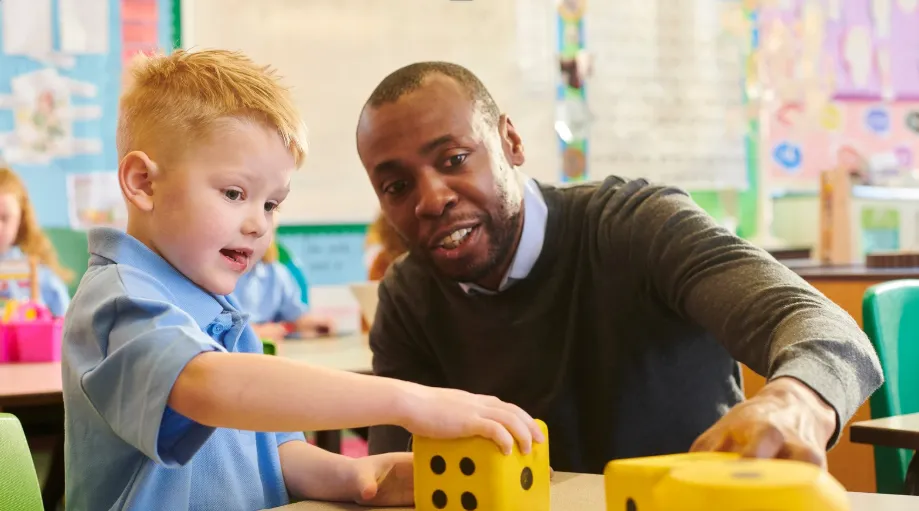
1. Concrete means hands-on understanding
Children begin by physically manipulating objects:
Counters
Cubes
Beads
Numicon-style resources
At this stage, maths is not symbolic. It’s experienced. It’s practical. Young children literally feel the maths.
But what does that mean?
It means they don’t learn numbers 1-10. They feel the numbers.
1 is one jump
2 is 2 claps
3 is collecting 3 toys
It’s about associating the numbers to themselves. How many hands do they have? How may fingers do they have etc. They become the numbers.
Why this matters:
It reduces fear
Anchors meaning
Builds real number sense
Children don’t just hear that 7 + 5 = 12.
They see and feel why.
Concrete learning means they are physically immersed in the learning.
Once they understand what numbers are physically, they move to the next phase.
2. Pictorial – Now this is where most western schools start
This is the visual representations:
Seeing the patterns
Reading the text
Using pictures
Using paper
Bar models
Number bonds
Part–whole diagrams
This is where Singapore Maths is especially distinctive.
The pictorial stage is about problem solving:
Seeing relationships visible
Drawing the answer
This helps children organise thinking
This is why Singapore-trained children are so strong at word problems—because they can see the structure, not just the numbers.
3. Abstract (Symbols make sense)
Only once the physical and visual understanding is secure do children move onto:
Numbers
Symbols
Algorithms
At this point children are able to work things out in their heads – what we refer to as mental maths:
Symbols like + = x now simplify their knowledge and make things easier to write down.
Procedures are logical, not random
Children know why methods work
This is where many systems begin. Whereas this is where Singapore Maths ends.
Why this makes maths feel “easy”
When children:
Understand how numbers work they can manipulate them memorising concepts more easily
When concepts are built step by step, there is a natural flow
Children don’t feel rushed and confused
Maths stops feeling like a test of intelligence and starts feeling like a solvable puzzle.
What parents need to know (and unlearn)
1. Confusion is not failure
If your child is drawing, using cubes, or talking through a problem, they are learning—even if it looks slower.
Once they understand the pictorial stage, ask them is there a way we can do the maths quicker? That’s when abstract representations make more sense.
For example: I want to solve the following problem: I have 20 seeds and need to plant them in my garden. If I plant them in rows, how many seeds will I plant in each row?
Concrete: put the seeds physically in different arrays.
Pictorial: draw the seeds in arrays
Abstract: 1x20, 20x1, 2x10, 10x2, 5x4, 5x4

2. Don’t rush to “the shortcut method”
Don’t jump to the abstract if they can’t see the concrete
Ask instead:
“Can you show me how you see it?”
“What does this part represent?”
3. The pictures matter
Bar models and diagrams are not a crutch. They are a bridge.
Strong visual thinkers become strong abstract thinkers.
4. Mastery means depth, not speed
Revisiting the same concept is a feature—not a flaw.
Why this matters beyond primary school
Children taught through CPA:
Are more resilient problem-solvers
Transfer skills across topics
Are less likely to develop maths anxiety
Perform better on unfamiliar problems
They don’t just learn maths.
They learn how to think mathematically.
Singapore Maths works because it respects how children learn.
When we slow down, make learning visible, and build understanding from the ground up, maths becomes something children can trust themselves with.
And that changes everything.
Frequently Asked Questions
You Might Be Wondering...
Is this free to join?
Yes — there’s no cost at all. In fact we provide our most successful affiliates their own webpage to sell from free of
charge.
How much can I earn?
You earn 30% commission on your first sale and then 15% on every sale your customer makes after that, for the
lifetime that your customer remains with us. This means you could be earning passive income from one customer for
years to come, as they buy new products. So there is capacity to earn passive income into the future, the more
customers you get.
In addition, if you introduce an affiliate to our program, you can earn a further 5% on all their customers' sales too.
Please be aware, we are very selective about our affiliates and they must meet our values and expectations. Otherwise their applications can be revoked according to our terms and conditions.
How do I promote?
We’ll send you images, captions and your unique link. We are also able to provide you a dedicated webpage with our
our products with your link on, that you can direct traffic to, this can generate you further income easily.
When do I get paid?
Payouts are processed 60 days and one week after a customer’s purchase, and are made via PayPal.
This time frame is necessary because of banking requirements, as we have to allow 2 months for any customer refunds.
You must also reach the £100 minimum payout threshold. Otherwise, frequent smaller payments would reduce your
commissions unnecessarily due to PayPal and banking fees, which are charged on every transaction.
By keeping payouts less frequent, we reduce charges—meaning you earn more.

Our affiliate courses are designed by experts who have years of experience and proven results in the affiliate marketing industry.
Explore Site
Newsletter
Subscribe To Our Newsletter
Copyright 2025. All Right are Reserved. The Parent Teacher