
Earn while empowering children, teens, parents & educators.
Share Resources. Empower Families. Promote mental health, creativity and learning resources — and earn generous commissions for every referral.



Why Partner with Us?
Our affiliate courses are designed by experts who have years of experience
❤️
Promote high-quality resources
Every product you promote is designed to uplift, educate and empower — so you can feel proud of every referral.
💸
Earn 15–30% commissions per sale
Earn generous commissions by sharing high-impact tools designed for real emotional growth.
📈
Unlimited earning potential
Unlimited earning potential with every product you promote — all while helping children, teens and families thrive.
👩🏫
Perfect for educators, content creators and parents
Ideal for educators, creators and mums & dads — turn your passion for helping kids into passive income.
🎁
Exclusive bonuses + early product access
Join today to access new launches before the public — plus earn extra rewards along the way.
💬
Supportive team & easy-to-use dashboard
You're never alone — our friendly team and intuitive dashboard make promoting simple and stress-free.

5+Courses

5k+Happy Clients

10+Programs

About us
About Parent Teacher Affiliate
Parent Teacher is a heart-centered platform dedicated to supporting the education, mental health, creativity and resilience of children, teens and their families.
Created by educators and mental wellness advocates, our tools are designed to bridge the communication gap between parents and their children and to help young people feel seen, supported and inspired.
Our offerings include:
📘 Guided mindset programs
🎨 Creative writing & art competitions
🃏 Crystal-themed cards for emotional support
🧠 Free printable tools & resources
Whether you're a parent, teacher, coach or creative — we invite you to join our mission and grow with us.
What You’ll Be Promoting
What Can You Share & Earn From?
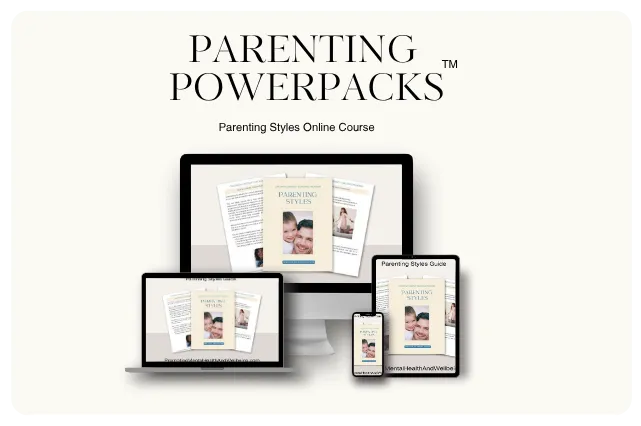
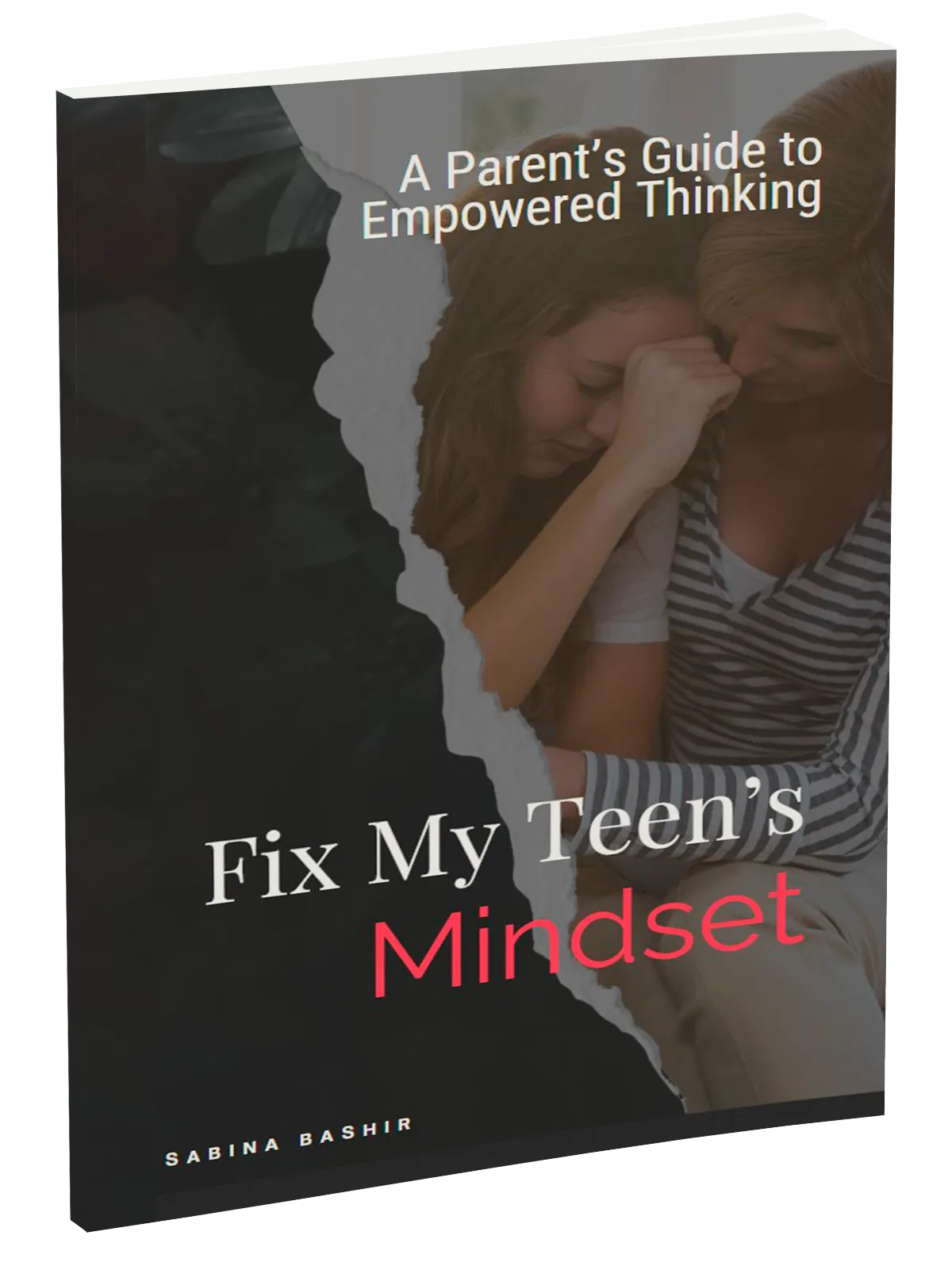
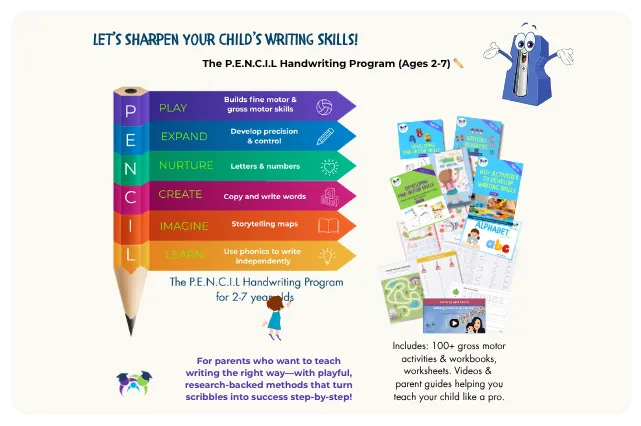
Crystal Card Packs
Mental health tools for teens

Teen Mindset Program
6-week emotional growth course
P.E.N.C.I.L Program
Educational and Wellbeing Products - More courses available soon
Your Path to Passive Income
Turn your passion for helping families and teens into a steady income — without stocking products, dealing with customer service, or investing in ads.
How It Works
It’s Simple and Rewarding
1️⃣ Sign Up
It’s fast and free
2️⃣ Get Your Unique Link
Share it anywhere
3️⃣ Earn Commission
Get paid monthly for every sale
Loved by Affiliates & Families Alike
Our courses are designed by experts who have years of experience and proven results in the education space.

"As a teacher with over 15 years of experience, I’m very selective about the programs I recommend to my network. These courses are not just theory—they’re practical, engaging, and grounded in solid educational research. My referrals consistently report remarkable improvements in their children’s confidence, communication, and learning mindset. Partnering with this team has been one of the easiest and most rewarding decisions I’ve made."

James L., Teacher & Education Affiliate
"As a parenting blogger, I’m constantly reviewing products and courses aimed at supporting families. What sets these programs apart is the heart and expertise behind them. Every lesson is crafted with both children and parents in mind, making it easy to build stronger connections while boosting learning outcomes. My readers love them, and I’ve seen first-hand how they transform everyday family life."

Emma R., Parenting Blogger
"I originally joined as a parent wanting to help my own children, but I was so impressed with the results that I became an affiliate. I set up my affiliate link once and shared it with my Facebook group. Now, I receive monthly commissions just from one post!”

Sarah P., Parent & Affiliate Partner
Ready to Join Our Affiliate Family?
Let’s grow together. Empower families and earn along the way.
Our Latest Articles
How Can I Help My Child Catch Up in Maths?
Sometimes the quickest way to help a child catch up in maths is to stop teaching them the maths they're struggling with.
I know that sounds backwards.
Your child is already behind. Surely the answer is to give them more practice, more explanations, perhaps a tutor, and help them catch up with what everyone else is doing?
Not necessarily.
I've taught for 30 years, and one of the biggest mistakes I see is trying to fix a problem at the point where it becomes visible, rather than finding where it actually began.
And in maths, those can be two very different places.
The quickest way to help a child catch up in maths is to find where the gap began, not just where the struggle shows. Work backwards until you reach something your child can explain confidently, then rebuild the missing idea with real objects, then drawings, then written calculations. Keep practice short and focused, and only then return to the harder work.
What you'll learn: Why more practice doesn't always help a child catch up, how to find where the gap in their maths really began, and what to do about it at home.
The mistake we make when a child falls behind
Imagine a Year 4 child struggling with column subtraction.
They understand what subtraction means. They can subtract smaller numbers. But when the numbers become larger and they need to exchange, everything starts going wrong.
So what do we do?
We explain the method again. We demonstrate another example. We give them a worksheet. Perhaps we find a video showing a different way to do it.
They might even get a few questions right while we're sitting beside them.
But the following day, they've forgotten.
The natural conclusion is that they need more practice.
Here's the question I'd ask instead.
Do they actually understand what they're exchanging?
Take 52 − 28.
To complete the calculation, the child needs to understand that 52 is five tens and two ones. They need to know that one of those tens can be exchanged for ten ones without changing the total.
Think of it like swapping a £10 note for ten £1 coins. You've still got the same money. It's just in a form you can use.
If that understanding isn't there, exchanging becomes a series of instructions to remember.
Cross this out. Write that number above. Put a one here. Now subtract.
Psychologists call the place we hold steps like these working memory. It's small, and it only holds things for a short time. When the steps don't mean anything, there's nothing for them to attach to in long-term memory, so they don't stay. That's exactly why it's gone by the next day.
The child might remember the procedure long enough to complete the worksheet, but they haven't necessarily understood the mathematics behind it.
And that matters, because the same understanding will be needed again and again.
Why gaps in maths don't simply disappear
Maths is different from many other subjects because so much new learning depends on what came before.
A child who struggles with place value may later struggle with written calculations.
A child who hasn't understood equal groups may find multiplication and division difficult.
A child who doesn't understand fractions as equal parts may struggle when they're asked to compare fractions, find equivalent fractions or calculate with them.
And here's where things become expensive for parents.
The child starts struggling with a Year 5 topic, so we arrange Year 5 tuition.
But what if the missing understanding comes from Year 3?
We're paying someone to teach more advanced work to a child who doesn't yet understand the knowledge that work depends on.
The tutor may be excellent. The child may work incredibly hard. But unless the earlier gap is identified, progress can be slow.
You can't build confidently on a foundation that isn't secure.
Two children can get the same score for completely different reasons
Imagine two Year 4 children who both score 50% on a maths assessment.
The first child understands place value and written calculations but struggles with fractions.
The second child understands fractions but has gaps in multiplication, division and place value.
Both get the same percentage.
But would you teach them the same things next?
Of course not.
Yet when parents are told their child is "working towards the expected standard", they don't always know which parts of the curriculum their child understands and which need attention.
A percentage tells you how much they got right.
It doesn't tell you enough about why they got the other questions wrong.
That's the information we need if we're going to help them improve.
So how do you find where your child started struggling?
The first thing I'd do is stop looking only at the work they're doing this year.
Look at the knowledge underneath it.
If your child is struggling with written division, check their understanding of multiplication, equal groups and place value.
If they're struggling with fractions, go back to the simpler fraction concepts taught in earlier years.
And don't just ask them to complete calculations.
Ask them to explain what they're doing.
A child who can answer 6 × 4 may have memorised 24. That's useful, but can they show you six groups of four? Can they explain why 6 × 4 and 4 × 6 give the same answer?
Sometimes a child knows the answer without understanding the idea.
Other times, they understand the idea but need more practice to become fluent.
Those are two different teaching problems.
And they need two different solutions.
Try this at home: Ask your child to show you 6 × 4 with counters or a drawing, not just tell you the answer. If they can't show you six groups of four, you've found your starting point.
What I'd do at home
Start with a topic your child finds difficult and work backwards until you reach something they can explain confidently.
If they get something wrong, don't immediately correct them.
Ask, "Can you show me how you worked that out?"
Listen carefully.
You're looking for the point where their thinking stops making sense, not simply the point where the answer becomes incorrect.
Once you've identified that point, teach the missing idea using something concrete.
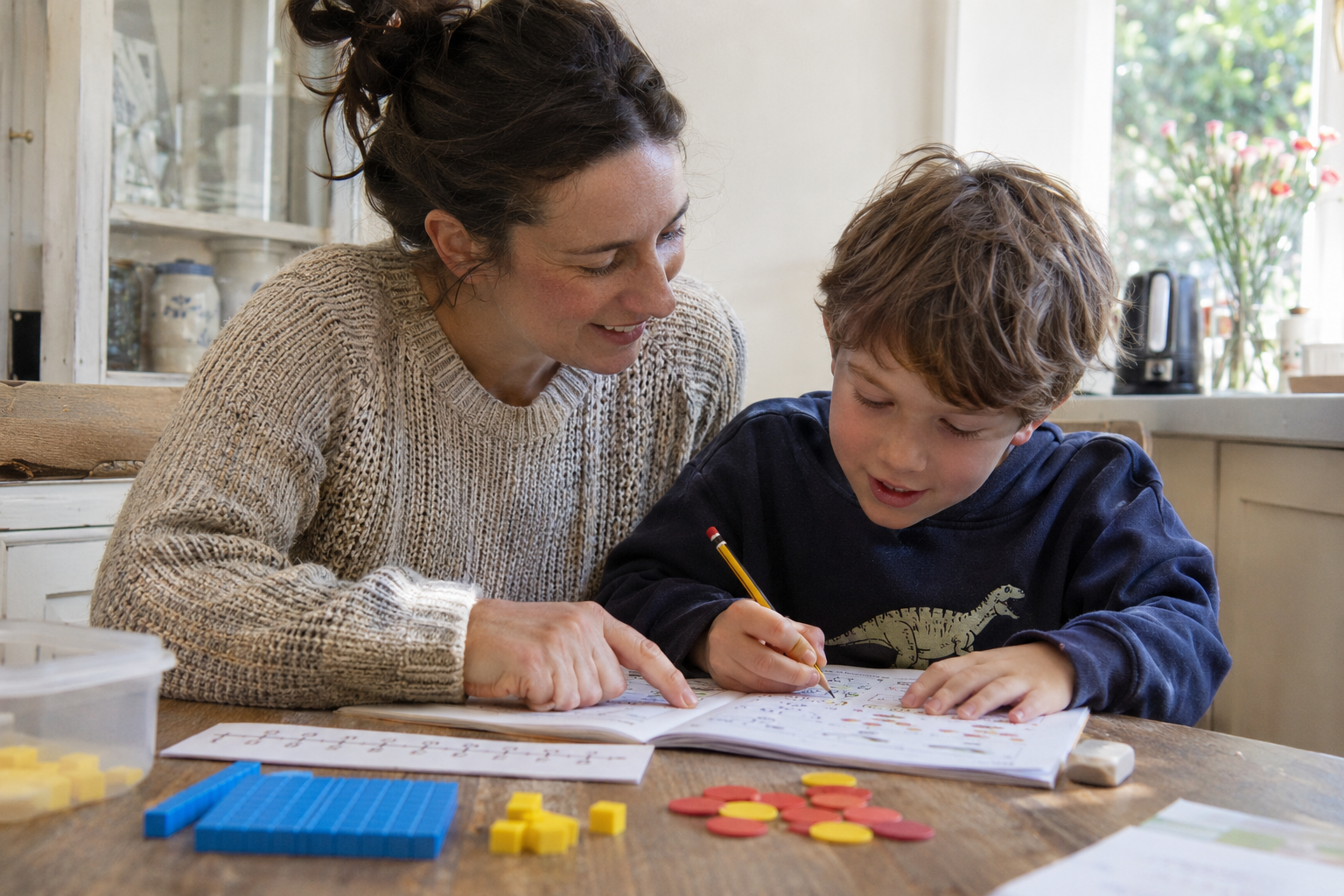
Counters, coins, drawings, blocks and everyday objects can all help children see what numbers represent.
For example, before returning to column subtraction, make sure they can physically exchange one group of ten for ten individual objects.
Then draw it.
Then write the calculation.
This is how we move from understanding something practically to understanding it on paper.
Keep the practice short and focused. It's better to spend ten useful minutes rebuilding one idea than forty frustrating minutes repeating questions your child doesn't understand.
And when they're ready, return to the harder work.
You may be surprised how quickly something that seemed impossible begins to make sense.
And what if your child understands the maths, but gets angry the moment you try to help?
I've explored why this happens in Why Does My Child Get Angry When I Help With Homework?
But how do you know which earlier topics to check?
This is the problem I wanted to solve when I created The Parent Teacher's End-of-Year Assessments.
Parents might know their child is working towards the expected standard.
But what exactly are they working towards? Which topics do they understand? And which ones are holding them back?
My assessments cover the maths curriculum for Years 1-6. Each assessment is £39 and includes all five booklets for that year group, rather than a single sample paper, so no topic is missed.
You don't need to be a teacher to mark them. The answer guides show you exactly what to look for.
Then you enter the results into my online Reporter, which turns your marks into a detailed report showing your child's strengths and the areas that need attention.
If your child is in Year 5, I'd often recommend beginning with the Year 4 assessments.
Why?
Because before worrying about what they can't do in Year 5, you need to know whether they understand what they should have learnt in Year 4.
If you'd like to see how it works first, let your child try my free Year 4 Maths Gap Finder.
And sometimes, you need to go back further.
The aim isn't to give children more tests.
It's to stop guessing what they need.
Parents also ask
Should I get my child a maths tutor if they're behind?
A tutor can help, but only if they're teaching what your child is actually missing. If the gap began in an earlier year, more work on this year's topics can make progress slow, however hard everyone works. Find the gap first, then decide what help your child needs.
Which year's maths should I check first?
Start with the year your child has just finished. If they're really struggling, go back a year further. You're looking for the point where they can explain the maths confidently, because that's where rebuilding begins.
How long should maths practice at home be?
Short. Ten focused minutes rebuilding one idea is worth more than forty frustrating minutes repeating questions your child doesn't understand. When the idea makes sense, return to the harder work.
One final thing
If your child is behind in maths, please don't assume they're incapable of understanding it.
I know, because I was that child. The one still working through the first step when the class had already moved on.
I've taught children who needed an idea explained in several different ways before it finally made sense.
That's part of teaching.
But when we keep giving children harder work without checking their foundations, we can make them feel as though they're failing, when what they really need is a different starting point.
You can't get a year ahead by skipping a year of learning.
And you can't reliably catch up by ignoring the learning that was missed.
Find the gap. Rebuild the foundation. Then move forward.
That's how we help children make progress that lasts.
Want to find out exactly where your child is in maths?
Explore my End-of-Year Maths Assessments for Years 1-6, at £39 per assessment, and discover which topics your child understands and where they need a little more help.

Frequently Asked Questions
You Might Be Wondering...
Is this free to join?
Yes — there’s no cost at all. In fact we provide our most successful affiliates their own webpage to sell from free of
charge.
How much can I earn?
You earn 30% commission on your first sale and then 15% on every sale your customer makes after that, for the
lifetime that your customer remains with us. This means you could be earning passive income from one customer for
years to come, as they buy new products. So there is capacity to earn passive income into the future, the more
customers you get.
In addition, if you introduce an affiliate to our program, you can earn a further 5% on all their customers' sales too.
Please be aware, we are very selective about our affiliates and they must meet our values and expectations. Otherwise their applications can be revoked according to our terms and conditions.
How do I promote?
We’ll send you images, captions and your unique link. We are also able to provide you a dedicated webpage with our
our products with your link on, that you can direct traffic to, this can generate you further income easily.
When do I get paid?
Payouts are processed 60 days and one week after a customer’s purchase, and are made via PayPal.
This time frame is necessary because of banking requirements, as we have to allow 2 months for any customer refunds.
You must also reach the £100 minimum payout threshold. Otherwise, frequent smaller payments would reduce your
commissions unnecessarily due to PayPal and banking fees, which are charged on every transaction.
By keeping payouts less frequent, we reduce charges—meaning you earn more.

Our affiliate courses are designed by experts who have years of experience and proven results in the affiliate marketing industry.
Explore Site
Newsletter
Subscribe To Our Newsletter
Copyright 2025. All Right are Reserved. The Parent Teacher